Compliance
What Is Compliance Automation Software? Everything You Need to Know
Rahul Sinha
5 mins

Compliance
Compliance automation software replaces manual tracking with continuous, auditable monitoring, and in 2026, regulators expect proof, not just policy. Here's what it is, how it works, the features that matter, and how to choose the right system.
Compliance automation software helps organizations replace manual tracking with continuous, auditable control monitoring. In 2026, that matters because regulators expect proof, not just policy documents. For many firms, a compliance management platform is now a practical necessity rather than a nice extra.
The compliance software market is worth $40.82 billion in 2026, and demand continues to rise. Manual spreadsheets, scattered email trails, and siloed reviews are no longer enough for modern compliance teams. This guide explains what compliance automation software is, how it works, and how to choose the right system for your firm.
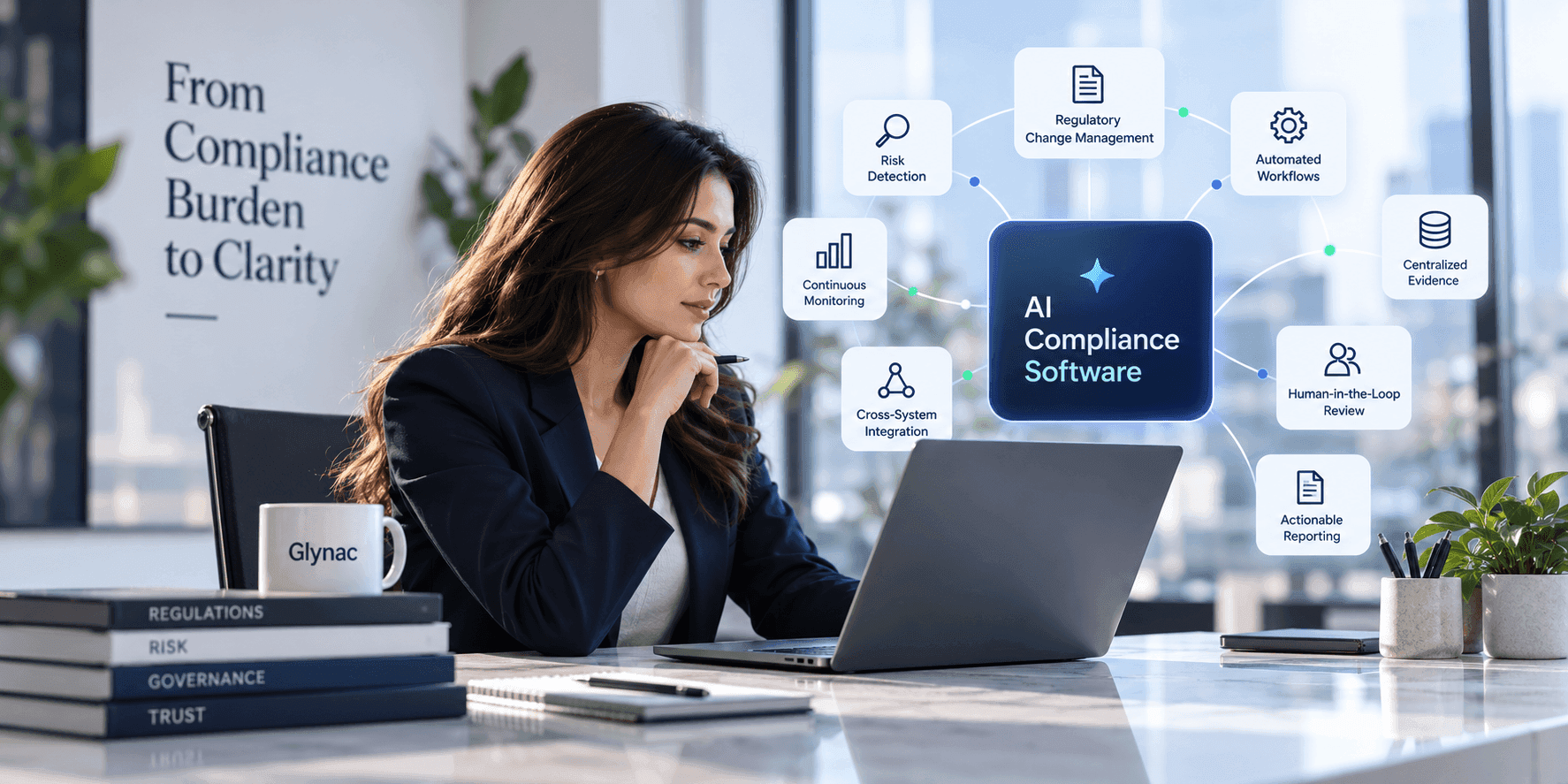
Compliance automation software centralizes evidence, controls, tasks, and alerts in one place. Instead of chasing updates through spreadsheets, teams work from a structured system that keeps records organized and current. That reduces manual effort and lowers the chance of missed obligations.
In practice, the software connects to business systems, watches for exceptions, and stores evidence automatically. It can also support compliance tracking software and compliance monitoring software functions that would otherwise take hours of manual work. For regulated teams, that shift changes compliance from reactive to continuous.
| Factor | Manual Compliance | Compliance Automation Software |
|---|---|---|
| Evidence collection | Spreadsheet-based and manual | Automated and continuous |
| Audit preparation | Weeks of scrambling | Always ready |
| Error risk | High due to oversight | Lower through rule-based checks |
| Regulatory updates | Slow and fragmented | Near real-time alerts |
| Scalability | Breaks under complexity | Scales across frameworks |
| Audit trail | Fragmented records | Complete and traceable |
| Human oversight | Depends on memory | Built-in approvals and escalations |
Regulatory pressure is now a board-level issue, not a side task. Recent compliance statistics show that compliance has become a top strategic priority for many organizations. That reflects a wider move away from point-in-time checks and towards continuous oversight.
The cost of getting it wrong is also rising. The SEC Marketing Rule continues to receive close scrutiny, especially from RIAs. The HIPAA Security Rule also raises the bar for security, access control, and documentation.
For many leaders, enterprise compliance software now sits alongside core business systems. That is especially true in banking, wealth management, healthcare, and other regulated sectors.
Most platforms connect to the systems where daily work already happens. They pull in data from cloud applications, identity tools, archives, filings, and communication systems. Then they compare that data with policy rules and regulatory requirements.
This is why people often ask how does compliance automation software work. The answer is straightforward: it watches, compares, explains, and records. The best tools also keep humans involved in final approvals and escalations.
A strong compliance reporting software layer then turns those findings into audit-ready outputs. That helps when filings, reviews, and regulator requests all land at the same time.
Not every platform is built for the same job. Some are designed mainly for startup audits, while others support more complex regulated environments. The right enterprise compliance software should offer scale, traceability, and enough flexibility to match your workflows.
For RIAs, the best fit is often an AI compliance software for wealth management approach. It should support workflows, evidence, and review, not just dashboards. That matters when data lives across email, CRM, filings, and archives.
| Feature | Why It Matters | Must-Have or Nice-to-Have |
|---|---|---|
| Continuous monitoring | Catches issues in real time | Must-Have |
| Source-linked findings | Every alert must be verifiable | Must-Have |
| Human-in-the-loop review | Keeps people in control | Must-Have |
| Audit trail | Supports regulator review | Must-Have |
| Multi-framework support | Maps one control to many rules | Must-Have |
| System integrations | Connects CRM, email, filings, and more | Must-Have |
| AI explainability | Shows why risk was flagged | Must-Have |
| Automated reporting | Cuts manual reporting time | Nice-to-Have |
The market is broad, and each category serves a different need. Most firms should not buy a platform before first identifying the specific workflow they need to improve.
An enterprise compliance software for regulated industries use case usually needs more than basic audit tooling. That is where workflow depth, evidence quality, and review design matter most.
Glynac AI is one of the best options for firms that want smarter compliance review without replacing human judgement. It works as an AI compliance intelligence layer, connecting fragmented data from CRM, portfolio, email, filings, and internal records. That makes it especially useful for RIAs and wealth management teams that need faster reviews, clearer evidence, and stronger audit trails.
Instead of forcing a full system replacement, Glynac AI sits on top of what you already use. It helps teams spot risk, reconstruct timelines, review marketing language, and compare filings with source-linked context. For firms that want practical compliance support, that combination makes Glynac AI stand out.
This is not a general purpose chatbot, and it is not another generic compliance management system. The table below sets out the core differences:
| Capability | Standard Compliance Tools | Glynac AI |
|---|---|---|
| Information quality | Only sees one data source | Source-linked findings you can verify |
| Response fit | Built for generic industries | Workflow specific for wealth management and RIAs |
| Human oversight | Optional approvals | Native human review built into every step |
| Audit trail | Partial and editable | Complete immutable review history |
| Implementation | 6-12 month project | Deploy one workflow in 2 weeks |
The goal is not to automate judgement away. The goal is to make compliance continuous, visible, and defensible. That is where the best compliance automation software stands apart.
A strong system should connect real data sources, explain every flag, and keep humans in control. For RIAs and wealth managers, that means choosing a compliance management platform that fits the way the firm actually works. It also means avoiding tools that look impressive but fail under real review pressure.

Rahul Sinha
Marketing Consultant
Marketing consultant and finance content specialist with deep expertise in the U.S. and UK wealth management industry. Author of 1,000+ published articles on investing, advisory trends, and financial regulation, with work cited on MSN and other leading platforms.
Continue exploring insights on wealth management
Compliance
Plenty of platforms carry the AI label; fewer can tell you why they flagged something. Here are the 10 features that separate modern AI compliance software from expensive filing, from source traceability and human-in-the-loop review to remediation you can actually verify.
Nirmala Royal
Marketing Research Assistant

Compliance
The audit itself isn't what wears compliance officers down—it's the fortnight before, spent digging out approvals and reconstructing who cleared what. Here's how compliance audit management software keeps evidence, ownership and monitoring running year-round, plus seven best practices for 2026.
Nirmala Royal
Marketing Research Assistant

Compliance
Discover AI compliance use cases that help RIAs strengthen compliance workflows, improve regulatory automation, and build effective AI risk management in 2026.
Vinamrata Yadav
Content Strategist