Compliance
5 Things to Look for When Choosing an AI Compliance Tool for a Growing Firm
Rahul Sinha
5 mins

Compliance
AI is already inside most advisory firms—the real question is whether controls still govern it well. Here are five things leadership should look for when choosing an AI compliance tool for a growing firm, starting with supervision, not automation.
AI is already inside most advisory firms now. It shows up in note takers, vendor features, and workflow tools. Employees also experiment with it quietly, often without asking first.
The buying question is not whether AI belongs. The question is whether controls still govern it well. A strong should improve oversight, consistency, and scale.
For context, Schwab's AI adoption study and AI for RIAs both show the trend is real. The SEC still expects supervision to work clearly. That means leadership needs five simple questions before choosing a platform.
| Industry Reality | Leadership Implication |
|---|---|
| AI use is expanding across advisory firms | Compliance visibility often lags adoption |
| Employees use AI through existing vendors | Shadow usage becomes harder to detect |
| Formal AI governance remains immature | Documentation gaps start to appear |
| SEC supervision expectations stay unchanged | Firms stay accountable for outcomes |
| Growth increases operational complexity | Manual controls become harder to sustain |
The risk is not AI adoption alone. It is unmanaged adoption. Leadership teams should judge visibility and accountability first.
Many firms buy software before naming the problem. That usually creates a tidy demo, then poor operations later. Start with the control gaps that already slow your team.
The best platforms for RIAs begin with real needs. They should match your processes, not your slide deck. That is how RIA compliance automation becomes useful.
| Internal Question | Why It Matters |
|---|---|
| Which compliance processes consume the most time? | Identifies automation opportunities |
| What concerns us most during an SEC exam? | Highlights documentation gaps |
| Where is AI already being used today? | Reveals shadow adoption |
| Which manual controls fail during peak periods? | Exposes scalability issues |
| Which vendors create the greatest exposure? | Prioritizes oversight efforts |
| How would we evidence supervision today? | Tests control effectiveness |
Automation is useful only when oversight stays visible. The best platforms for RIAs show every reviewer and approver. That matters when exam questions arrive months later.
A strong AI compliance tool for independent RIAs should prove supervision clearly. It should not just move tasks around faster. The best compliance platforms for RIAs already fit these tasks.
Generic vendor AI tools for SEC compliance often need heavy customization. An AI compliance tool for independent RIAs should already understand advisory workflows. That includes marketing reviews, books and records, and employee compliance.
The best compliance platforms for RIAs already fit these tasks. They should handle Form ADV work, policy approvals, and exam prep cleanly. Anything less adds friction before the work even starts.
Growth exposes every slow workflow. RIA compliance automation should reduce follow-up work, not create more. The goal is capacity, not just more alerts later.
The top compliance solutions for RIAs keep work moving. They also help automate compliance at a growing firm. That is what keeps teams from adding headcount too early.
| Operational Indicator | Potential Consequence |
|---|---|
| Increasing reliance on spreadsheets | Higher error risk |
| Repeated follow-ups for routine tasks | Reduced efficiency |
| Difficulty locating supporting records | Examination pressure |
| Compliance dependent on key individuals | Knowledge concentration |
| Delayed issue escalation | Control breakdowns |
| Growing backlog of reviews | Capacity constraints |
Many firms notice strain only after delays pile up. Compliance automation for RIAs works best before that point. A smoother system protects time and consistency well.
Key Benefits
Outside vendors create real exposure too. Many vendor AI tools for SEC compliance sit outside direct control. The platform should help inventory, review, and monitor them.
That matters because risk often starts outside the firm. A good AI compliance tool for independent RIAs should track those vendor relationships cleanly. Complaint management classification should also flag vendor-related issues quickly.
Key Capabilities
Firms rarely stay the same size for long. An AI compliance tool for independent RIAs should scale cleanly. Configurability matters more than flashy extras in practice.
The best platforms for RIAs keep adapting without rebuilding everything. They should work for one office today, then several later. That is what makes a platform worth keeping.
Key Requirements
| Selection Criterion | Why It Matters |
|---|---|
| Supervisory evidence | Supports examination defensibility |
| Advisory-specific functionality | Reduces customization burden |
| Operational efficiency gains | Improves scalability |
| Vendor oversight capabilities | Addresses third-party exposure |
| Workflow flexibility | Supports changing processes |
| Reporting quality | Improves leadership visibility |
| Ease of adoption | Drives sustainable use |
Leadership teams should not buy AI just because it is trending. They should buy control, clarity, and consistency. That is the real promise of an AI compliance tool for independent RIAs.
The firms that win usually choose tools that fit the work. They do not chase the loudest demo. They pick the best compliance platforms for RIAs that help people do their jobs better.
The right choice starts with control, not curiosity. An AI compliance tool for independent RIAs should strengthen supervision, keep records clean, and support steady growth. That is what makes the decision feel solid later.
The top compliance solutions for RIAs reduce friction today and protect defensibility tomorrow. The best platforms for RIAs do not just add features. They make leadership more confident, and that matters most.
The best AI compliance tool for independent RIAs fits supervision needs. It should also scale without adding manual work.
Start with controls, not demos or feature lists. Ask how the platform proves review, escalation, and retention.
Ask where AI already appears and who supervises it. Then ask what evidence you would show examiners.
Use routing, reminders, and logging first. Keep approvals human, especially for risky exceptions.
SEC expectations still focus on supervision and accountability. Tools should make those outcomes easier to prove.
Keep named reviewers, timestamps, and exception notes. Export those records before audit season arrives again.

Rahul Sinha
Marketing Consultant
Marketing consultant and finance content specialist with deep expertise in the U.S. and UK wealth management industry. Author of 1,000+ published articles on investing, advisory trends, and financial regulation, with work cited on MSN and other leading platforms.
Continue exploring insights on wealth management
Compliance
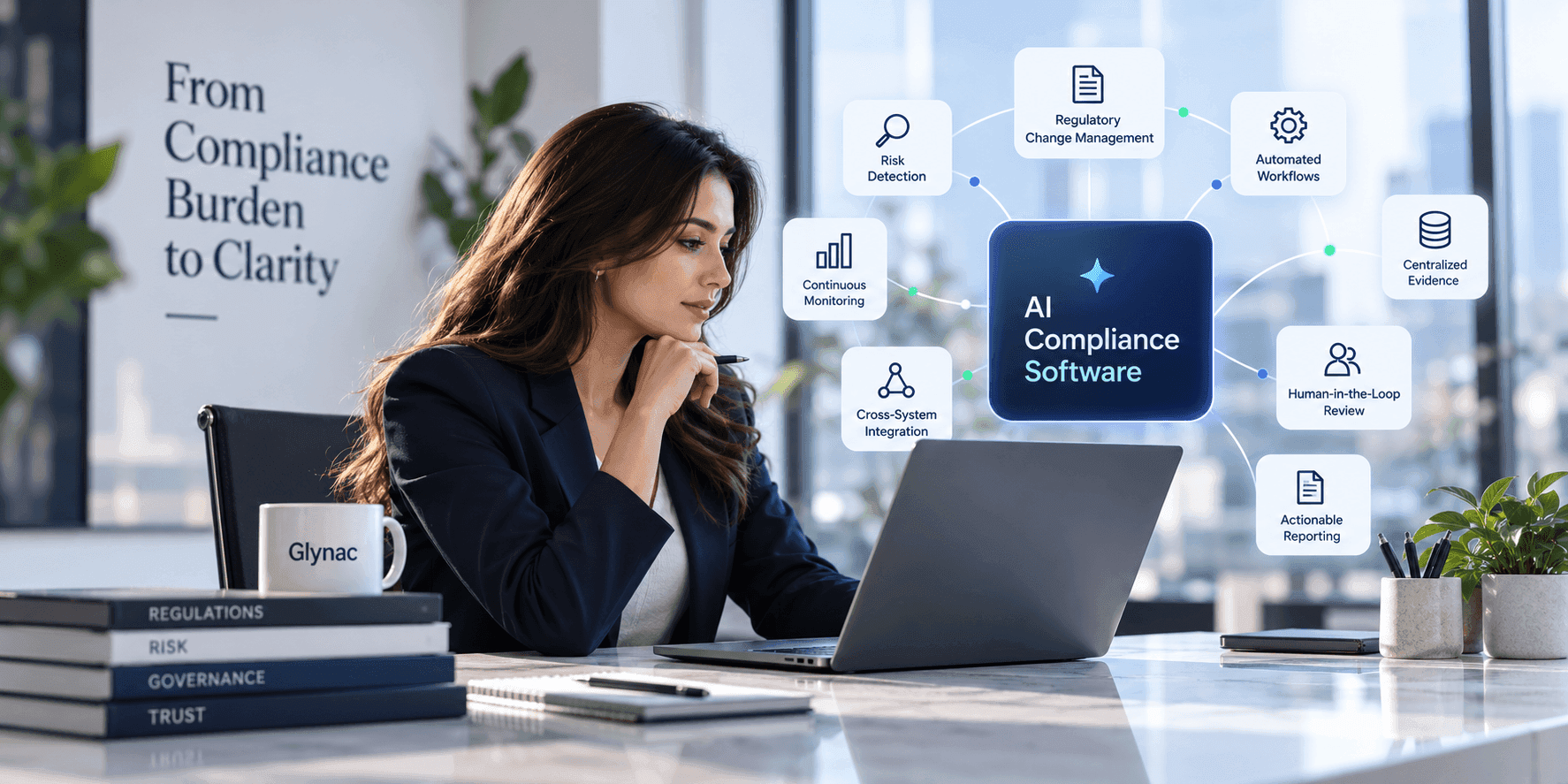
Plenty of platforms carry the AI label; fewer can tell you why they flagged something. Here are the 10 features that separate modern AI compliance software from expensive filing, from source traceability and human-in-the-loop review to remediation you can actually verify.
Nirmala Royal
Marketing Research Assistant

Compliance
The audit itself isn't what wears compliance officers down—it's the fortnight before, spent digging out approvals and reconstructing who cleared what. Here's how compliance audit management software keeps evidence, ownership and monitoring running year-round, plus seven best practices for 2026.
Nirmala Royal
Marketing Research Assistant

Compliance
Discover AI compliance use cases that help RIAs strengthen compliance workflows, improve regulatory automation, and build effective AI risk management in 2026.
Vinamrata Yadav
Content Strategist