Compliance
Regulatory Compliance Automation: How Businesses Are Reducing Audit Work by 70% Through Smart Workflows
Rahul Sinha
5 mins

Compliance
Audit pressure is rising, and leadership feels it first. Here are the six smart workflow strategies driving regulatory compliance automation in 2026—from communications review to ADV comparison, billing checks, and timeline reconstruction.
Audit pressure is rising, and leadership teams are feeling it first. The FINRA 2026 Regulatory Oversight Report and the SEC rulemaking page both point towards tighter oversight, clearer evidence, and faster proof.
That shift is why regulatory compliance automation has moved from a back-office idea to a leadership priority. Firms that still depend on spreadsheets, scattered emails, and manual sampling spend too long assembling evidence that should already be visible.
Here is the practical picture for 2026:
The firms making progress are not chasing more noise. They are building smarter review paths that help teams work faster, with less rework and better visibility.
The strongest systems are not built around one task. They connect the firm's work, highlight what needs review, and keep the audit trail intact.
Communications review is one of the most time-sensitive parts of modern oversight. Regulatory compliance automation helps teams scan content before it reaches a client, prospect, or public channel.
This matters because unsupported claims, missing disclosures, and risky wording remain common triggers under FINRA Rule 2210 and the SEC Marketing Rule.
| Capability | Manual Review | Smart Workflow |
|---|---|---|
| Coverage | Sampled items only | Broader across connected channels |
| Speed | Hours or days | Near real time |
| Traceability | Often inconsistent | Source-linked and logged |
| Disclosure checks | Easy to miss | Flagged before release |
| Human review | Required | Still required |
What smart automation does well:
The result is better screening, better recordkeeping, and less wasted time.
Form ADV changes may look small, yet small differences can create real risk. Side-by-side comparison helps teams catch what changed, why it changed, and whether the update needs more attention.
This is one of the clearest places where regulatory compliance automation saves time without reducing oversight.
Useful workflow gains:
| Step | Manual Process | Automated Workflow |
|---|---|---|
| Version comparison | PDF by PDF | Auto-highlighted differences |
| Review notes | Written by hand | Logged in the workflow |
| Cross-checking | Separate tools | Connected records |
| Time needed | Hours to days | Minutes |
| Audit trail | Patchy | Traceable and exportable |
For teams that handle many filings, this is a practical way to reduce delay and cut review fatigue.
Billing issues are often hard to see in spreadsheets because the key data sits in different systems. When account values, fee schedules, and CRM records do not line up, small errors can stay hidden too long.
Connected workflow tools can surface the mismatch for review before it becomes a client issue.
What this workflow should do:
This is one area where regulatory compliance automation supports both fiduciary discipline and operational order. It gives teams a clearer view of what changed and why.
When an investigation starts, speed matters. Teams need to know what happened, when it happened, and which records support the story.
Connected timelines are valuable because they reduce guesswork and cut the time needed to rebuild events from scattered files.
| Factor | Manual Assembly | Connected Workflow |
|---|---|---|
| Time to reconstruct | Days or weeks | Minutes |
| Data sources | Limited and separate | Connected across systems |
| Missing items | Easy to overlook | Surfaced automatically |
| Traceability | Often weak | Built into the record |
| Investigation support | Reactive | Ready on demand |
Helpful functions include:
This is one of the clearest examples of regulatory compliance automation reducing stress during high-pressure reviews.
Outsourcing does not remove responsibility. Leadership still needs proof that vendors are being reviewed, tracked, and managed properly.
That is where connected oversight becomes useful.
What the workflow should cover:
Good vendor oversight is not about more admin. It is about keeping the review cycle visible and consistent.
The newest stage of regulatory compliance automation is not just about alerts. It is about asking a direct question and getting a source-based answer from the firm's own records.
That is where an AI compliance intelligence layer for RIA firms becomes useful.
What this approach can support:
| Capability | Generic AI Tool | Compliance Intelligence Layer |
|---|---|---|
| Data source | General model data | Connected firm records |
| Answer basis | May be broad or vague | Source-cited and specific |
| Audit trail | Limited | Logged and reviewable |
| Compliance design | Not purpose-built | Built for oversight |
| Human review | Optional | Required in workflow |
For teams under pressure, this can save time without lowering standards.
Most systems automate one task well, then stop. Glynac takes a wider view by sitting across existing systems and helping teams review risk in one connected place.
That makes it useful for firms that want a stronger operating layer without replacing their current stack. Glynac is built as an AI compliance intelligence layer for RIA firms, with a focus on source-traceable oversight and human review.
Glynac is designed to support real review work, not replace it.
It can help teams:
The value is not in bigger claims. It is in clearer oversight, less manual searching, and more consistent review.
A generic tool often tracks tasks well, but stops short of connected oversight. Glynac is built around source-linked review and controlled access.
What stands out:
That design makes it a strong fit for firms that need structure, not just more software.
Regulatory compliance automation is now a practical leadership issue, not just a compliance project. Firms that connect data, tighten workflows, and keep human review in the loop are in a much better position when audits arrive.
The strongest results usually come from small, high-value changes. Communications review, ADV comparison, billing checks, vendor oversight, and timeline reconstruction can all reduce manual effort when they are linked properly.
For leadership teams, the right question is no longer whether to automate. It is where the workflow break is, and which connected system can close it with the least friction.

Rahul Sinha
Marketing Consultant
Marketing consultant and finance content specialist with deep expertise in the U.S. and UK wealth management industry. Author of 1,000+ published articles on investing, advisory trends, and financial regulation, with work cited on MSN and other leading platforms.
Continue exploring insights on wealth management
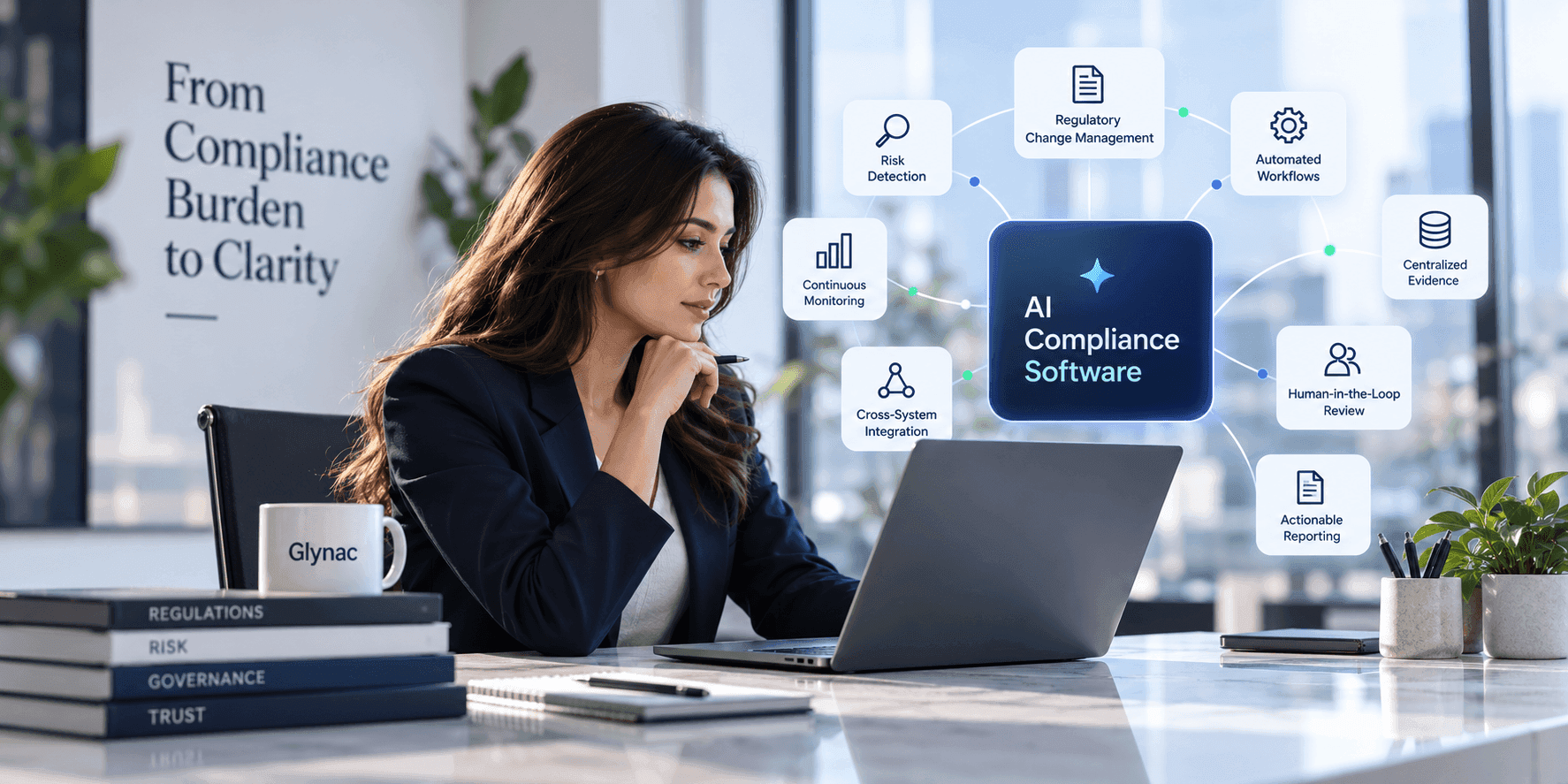
Compliance
Plenty of platforms carry the AI label; fewer can tell you why they flagged something. Here are the 10 features that separate modern AI compliance software from expensive filing, from source traceability and human-in-the-loop review to remediation you can actually verify.
Nirmala Royal
Marketing Research Assistant

Compliance
The audit itself isn't what wears compliance officers down—it's the fortnight before, spent digging out approvals and reconstructing who cleared what. Here's how compliance audit management software keeps evidence, ownership and monitoring running year-round, plus seven best practices for 2026.
Nirmala Royal
Marketing Research Assistant

Compliance
Discover AI compliance use cases that help RIAs strengthen compliance workflows, improve regulatory automation, and build effective AI risk management in 2026.
Vinamrata Yadav
Content Strategist