Compliance
Compliance Audit Management Software: Best Practices for 2026
Nirmala Royal
5 mins

Compliance
The audit itself isn't what wears compliance officers down—it's the fortnight before, spent digging out approvals and reconstructing who cleared what. Here's how compliance audit management software keeps evidence, ownership and monitoring running year-round, plus seven best practices for 2026.
Most compliance officers don't mind the audit. What wears them down is the fortnight before it, when half the job turns into archaeology: digging out an approval from March, working out who cleared a marketing piece in Q2, finding that the attestation tracker quietly stopped being updated in January when the analyst who owned it moved teams.
Good compliance audit management software exists to stop that fortnight happening, keeping controls, evidence, findings and remediation in one place year-round so the work is done before anyone asks.
Budgets are tightening around the same problem. CUBE's Cost of Compliance Report 2025 found 60% of organisations expect compliance costs to climb over the next twelve months, awkward to explain to a board when headcount is flat.
Think of it as where your audit lives when it isn't living in Outlook. You plan there, keep the control library there, attach evidence as it's produced, log findings, hand remediation to someone by name, and end up with a record an examiner can follow.
Typical capability set:
By your third vendor demo these lists blur into one. What separates a working platform from expensive filing is whether it answers four questions in a minute: what happened, who owns it, what evidence sits behind it, what's still open.
Compliance used to run on a seasonal clock. Audit gets scheduled, evidence gathered in a burst, findings written up, then eight quiet months before it starts again.
It's failing for two reasons. Examiners want supervision as it actually happened, not a version assembled the week before they arrived, and the records have scattered across CRM, email, portfolio systems and filings until reconstructing anything became a project.
"Information security continuous monitoring (ISCM) is defined as maintaining ongoing awareness of information security, vulnerabilities, and threats to support organizational risk management decisions." — NIST SP 800-137
Read "compliance" where NIST says "information security" and the logic transfers. Get the controls right, then keep checking they still are.
One home for evidence. Retrieval, not judgement, is where audit time disappears. One control review might touch policies, approval histories, a risk assessment, three email threads and last year's finding. Every requirement should trace to its control, that control to its evidence, and the evidence to whatever decision followed.
Name an owner, not a team. Departmental ownership sounds collaborative and functions as nobody. Whoever owns a control should know what it does, how often it fires, what evidence it produces, and what happens the day it fails.
Automate the admin, keep the judgement. Evidence chasing, review routing, overdue escalation, approval chains, the monthly management pack. All of it can run without a person. The decisions in the middle shouldn't.
Wire risk and compliance together. When a control fails, someone should be able to say within minutes which risk it covered and what that exposes. That chain is the whole promise of GRC platforms, and usually the first thing a board asks about.
Capture the trail as you go. Six things, retrievable without digging: what happened, when, who, what they looked at, what they decided, what followed. An alert nobody can trace back to a source record is worse than no alert, since someone still loses an afternoon deciding whether to believe it.
Monitor where failure is expensive. Watching everything equally just teaches people to close alerts without reading them. Missing approvals, lapsed attestations, exceptions granted eighteen months ago and never revisited, access that survived a role change, remediation past its date. Most compliance monitoring tools let you tier this.
Convert regulatory updates into assigned work. CUBE also reported 74% of firms take over a year to implement new regulations, which has less to do with effort than with updates dying quietly in inboxes. Regulatory compliance software helps only if the update comes out the other side as a task with a name, a date and an evidence requirement.
| Area | Traditional | Modern |
|---|---|---|
| Evidence | Spread across drives and inboxes | Centralised, linked to controls |
| Monitoring | Periodic, mostly pre-audit | Continuous or risk-weighted |
| Findings | Emerge during the audit | Emerge throughout the year |
| Ownership | Assumed, rarely written down | Assigned to named people |
| Remediation | Manual chasing | Workflow-driven |
| Audit trail | Rebuilt when someone asks | Captured as work happens |
| Audit readiness | An annual project | A standing condition |
None of this removes people from compliance. It removes the administrative tax that stops them doing the part only they can.
AI earns its place at the reading-heavy end of this work. Comparing document versions, rebuilding a timeline across five systems, flagging the transaction that doesn't look like the other four hundred. Deciding what to do about it is a different job.
The arrangement that survives scrutiny keeps the tool on one side of the line: it identifies, explains why, a person reviews and decides, the system records the sequence. NIST's AI Risk Management Framework pushes toward the same qualities. Anything that flags an issue without showing its working has handed your team more verification, not less.
Glynac is an AI-powered compliance intelligence layer built for wealth management firms and RIAs. The starting assumption is that you don't need to replace your stack, you need the pieces of it talking to each other.
Teams use compliance management software of this kind to surface anomalies worth a second look, investigate with context already attached, rebuild timelines without manual work, and end up with an audit trail that accumulated as a byproduct of ordinary work.
If you'd rather see it against your own environment than a demo dataset, talk to the Glynac team.
Adopting compliance audit management software isn't about neater records. It shifts when the work happens. Firms that fold evidence, ownership and monitoring into ordinary operations aren't more diligent than anyone else, they've stopped compressing three months of compliance into three.
Whatever you run should answer one question fast. What happened, why, who reviewed it, can you prove it? Get that down to minutes and audit readiness stops being a calendar event.
A platform for running audits, controls, evidence, findings and remediation from one place, with the audit trail building itself as work happens.
It can, though risk-weighted monitoring beats watching everything. High-risk controls get frequent oversight; the rest don't flood the queue.
No. It takes repetitive work off them. Judgement and accountability stay where they were.
Heavy overlap. Internal audit management software is built around the audit cycle; compliance audit software leans toward day-to-day control operation. Most firms want both under one roof.
Nirmala Royal
Marketing Research Assistant
Marketing research and content professional with a focus on SEO, industry research, and creating clear, research-driven content that helps businesses understand emerging trends and technologies.
Continue exploring insights on wealth management
Compliance
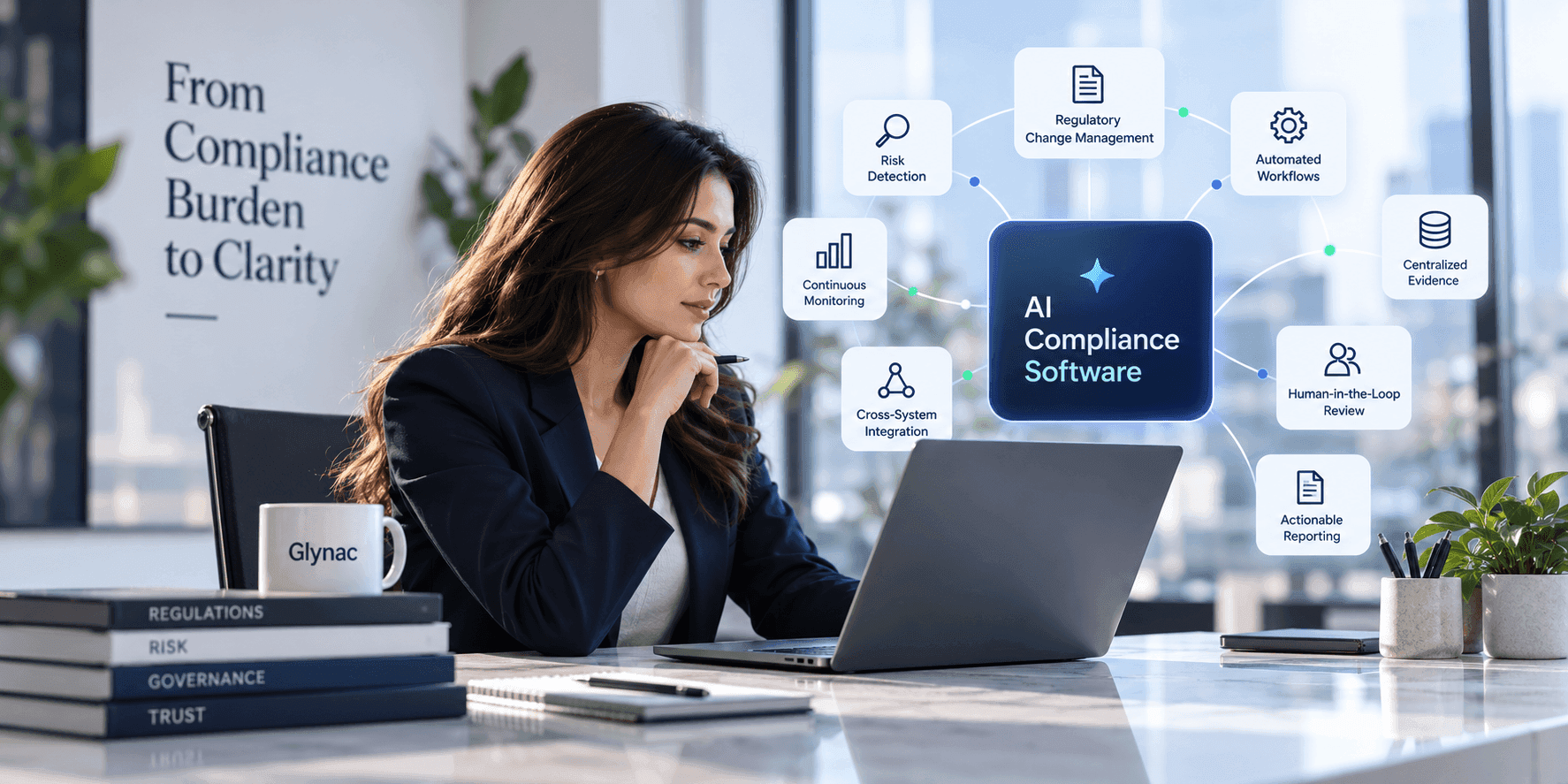
Plenty of platforms carry the AI label; fewer can tell you why they flagged something. Here are the 10 features that separate modern AI compliance software from expensive filing, from source traceability and human-in-the-loop review to remediation you can actually verify.
Nirmala Royal
Marketing Research Assistant

Compliance
Discover AI compliance use cases that help RIAs strengthen compliance workflows, improve regulatory automation, and build effective AI risk management in 2026.
Vinamrata Yadav
Content Strategist

Compliance
See how compliance automation tools enable RIAs to automate supervision, improve audit readiness, and build a more resilient compliance program.
Vinamrata Yadav
Content Strategist