Compliance
How GRC Platforms Support Regulatory Compliance & Governance?
Rahul Sinha
5 mins
Compliance
GRC platforms help compliance teams manage regulatory change, map controls, collect evidence, and report to leadership, all in one place. With Protiviti tracking over 61,000 regulatory changes in a single year and IBM putting the average breach cost at $4.88M, the case for structured governance risk and compliance management software has never been clearer.
Slug URL: how governance risk compliance grc platforms support compliance
Compliance is not getting simpler. It is getting faster, broader, and more connected across teams. Protiviti reported 61,228 regulatory change events in a year, which works out to roughly 234 changes a day. That pace is exactly why a regulatory compliance management tool & software layer matters for modern teams.
Budgets are moving for a reason. Thomson Reuters found 62% of compliance teams expected budget growth, and IBM put the average global breach cost at $4.88M. That is why enterprise governance risk and compliance platforms, a strong compliance management software system, and real regulatory compliance management tools are moving from nice-to-have to core operating tools. They help teams track controls, keep evidence straight, and show leadership what is actually happening.
A GRC platform is not just another document vault. A true governance risk and compliance management software setup connects decisions, risks, and evidence in one place. Governance tells you who owns the call, risk tells you what could go wrong, and compliance tells you which rules and controls prove the work. That is the basic job of a regulatory compliance management tool & software program.
In plain English, this kind of system gives you one operating view. It replaces scattered trackers with something that can support real oversight. A strong compliance management software system should help teams act, not just store files.
| GRC Area | What It Covers | Why It Helps |
|---|---|---|
| Governance | Owners, approvals, accountability | Leaders can steer decisions |
| Risk | Exposure, likelihood, impact | Teams know what needs attention |
| Compliance | Rules, controls, evidence | Audits become easier to manage |
Spreadsheet compliance breaks in predictable ways. It creates duplicate work, hides ownership gaps, and makes evidence hard to trust. A spreadsheet can list tasks, but it cannot behave like a real regulatory compliance management tool & software system when the pressure hits.
This is usually where teams feel the pain first. Security, legal, privacy, and internal audit all end up in different files, then no one agrees on which version is current. That is why regulatory compliance management tools and enterprise governance risk and compliance platforms keep replacing hand-built trackers.
This is where the platform earns its keep. A good GRC setup helps teams track regulatory change, assign the work, map controls, collect evidence, and show the result without creating more noise. That is why governance risk and compliance management software is often treated as the backbone of a compliance program.
Regulatory change management starts with finding what changed and deciding whether it applies. After that, the team needs a clear impact review, a task owner, and a due date. This is one of the clearest places where regulatory compliance management tools save time and prevent missed steps.
A workable process keeps the change tied to the controls and procedures that need to move. It also creates a clean record of the decision, which matters when someone asks how the firm handled the update.
Control mapping is where a lot of programs finally stop repeating themselves. One control can often satisfy more than one framework, so there is no reason to rewrite the same answer for every audit. That is one of the strongest parts of enterprise governance risk and compliance platforms.
This is also where a strong compliance management software system helps the most. Instead of building separate records for every audit, the team can connect one control to privacy, security, internal audit, and industry requirements.
Evidence collection is where automation pays off quickly. Requests go to the right owner, evidence comes back with context, and the review trail stays intact. A good regulatory compliance management tool & software should make that path clean and easy to follow.
The best systems store more than an attachment. They keep the control, the date, the reviewer note, and the approval history together, so the next audit does not start from zero.
Policies should not sit as isolated files. They need versioning, approvals, and a direct link back to the controls they support. That is where regulatory compliance management tools help the most, because they keep policy work tied to actual compliance activity.
A good platform makes it easy to see the current version and the approval trail. It also keeps attestations and acknowledgments in one place, which matters more than people think.
Risk assessments keep teams from treating every issue as urgent. Good scoring helps you see where the real exposure sits and where it is getting worse. That is one of the main reasons firms invest in governance risk and compliance management software.
A risk register works best when it is tied to actual controls and owners. Then leaders can see not just what the risk is, but what is being done about it.
| GRC Module | What It Solves | Proof It Creates |
|---|---|---|
| Regulatory change management | Tracks and implements updates | Impact reviews and task logs |
| Control mapping | Links requirements to controls | Crosswalks and ownership records |
| Evidence management | Collects and stores proof | Evidence packets and review trails |
| Policy management | Tracks versions and attestations | Approvals and acknowledgments |
| Audit management | Plans and tracks audits | Findings and remediation history |
Governance is what happens when leadership can actually see risk clearly. It is not just about filing things correctly. Enterprise governance risk and compliance platforms help leaders understand what matters, who owns it, and whether the response is working.
That is where the reporting layer becomes useful. If leaders only get long lists and status updates, governance stays weak. If they get trends, ownership, and decisions, they can actually steer.
A lot of programs track compliance like a checklist, then wonder why governance still feels thin. The missing piece is usually the link between control work and decision-making. A solid compliance management software system makes that connection visible.
What leaders usually want is simple. Tell them what changed, what the exposure is, and what happens next. A well-run regulatory compliance management tool & software gives them that view without making them read through twenty pages of detail.
Here is what a real workflow looks like in practice. A new requirement is flagged, the team checks whether it applies, and then the owner updates the control, procedure, and evidence trail.
That is the difference between managing compliance with memory and managing it with structure. A strong governance risk and compliance management software setup turns one regulation change into a path the team can repeat next time.
| Requirement | Mapped Control | Evidence Example | Owner |
|---|---|---|---|
| Access must be restricted | Role-based access control | Access reviews, IAM logs | IT Security |
| Changes must be approved | Change management | Tickets, approvals, test results | Engineering |
| Incidents must be tracked | Incident response process | Incident log, postmortem notes | Security |
The best tools fit the workflow, not just the slide deck. If the system is only good at looking polished, it will not hold up once the audit work starts. That is why regulatory compliance management tools need to be tested against real use cases, not just demo scenes.
A good platform should help with control mapping, evidence, audits, and reporting. It should also connect to the systems your teams already use, so the work does not become another manual chore.
| Demo Question | What To Ask | Why It Matters |
|---|---|---|
| Control mapping | Can one control map to multiple frameworks? | Cuts duplicate work |
| Evidence workflow | Can we request, review, and approve evidence? | Creates audit proof |
| Audit readiness | How fast can we export a packet? | Saves time during reviews |
| Integrations | What connects natively? | Affects implementation effort |
| Reporting | Can executives understand it quickly? | Makes governance useful |
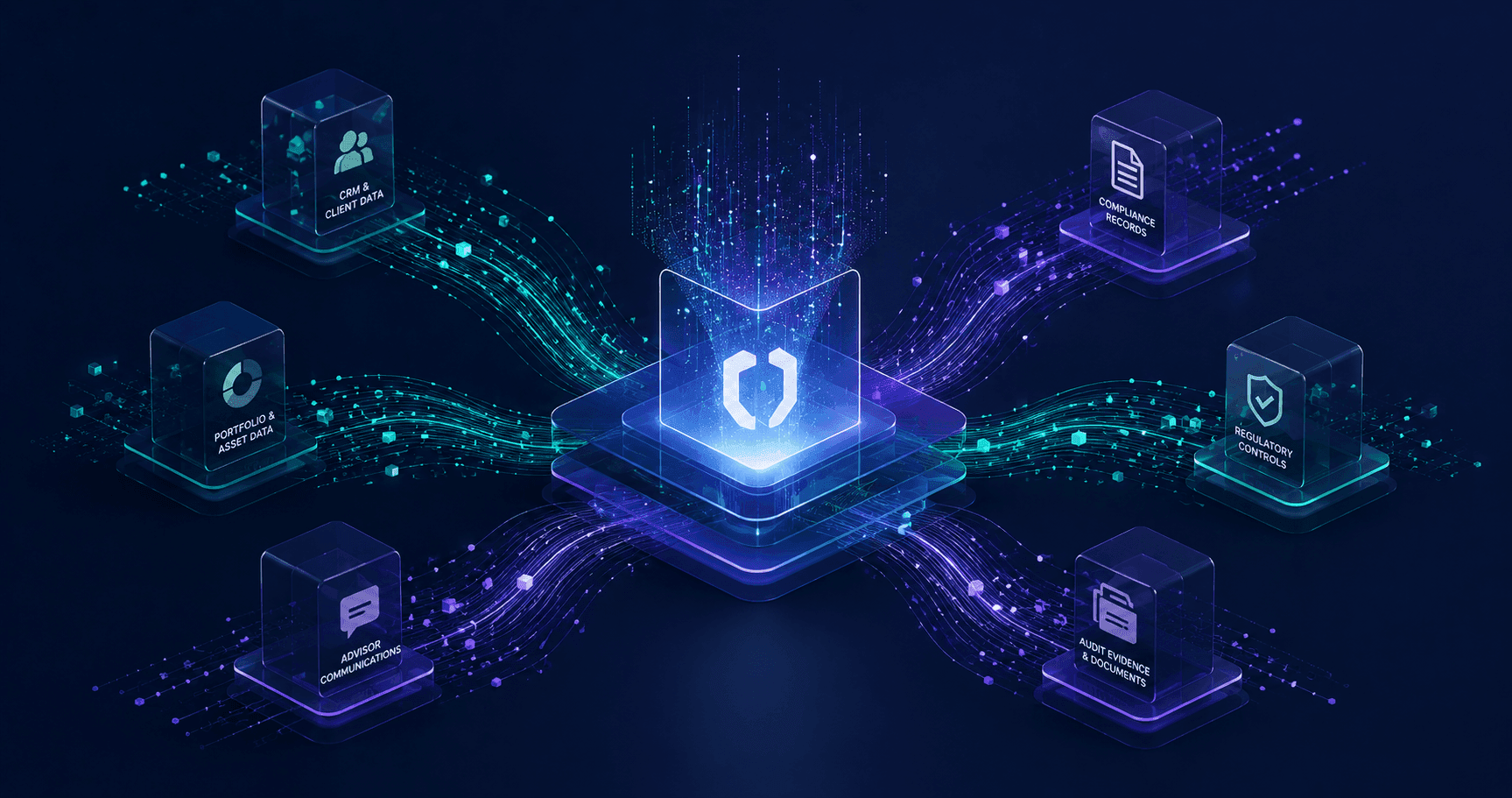
For COOs, CIOs, and compliance leaders, the challenge is usually visibility. Glynac AI brings CRM data, portfolio systems, advisor communications, filings, and internal reviews into one compliance intelligence layer. That gives leadership a clearer view of risk, evidence, and workflows without adding more manual work.
Glynac AI supports human teams with context, faster reviews, and better audit readiness while working alongside existing systems. That makes it practical for leadership teams that want stronger oversight without a heavy operational lift.
If regulatory change keeps moving and audit pressure stays high, a GRC platform becomes part of the operating system, not another tool on the side. It helps teams manage controls, keep evidence clean, and show leadership what is really happening. That is where enterprise governance risk and compliance platforms deliver the most value.
The goal is not perfect compliance theater. It is a repeatable system that creates proof, ownership, and better decisions. When regulatory compliance management tool & software and governance risk and compliance management software are set up well, the team gets fewer surprises and a much cleaner path through the work.
It centralizes controls, risks, policies, evidence, and reporting. That makes compliance easier to prove and governance easier to manage.
They map regulations to controls, automate evidence collection, track remediation, and create audit-ready records. That is the core value of governance risk and compliance management software.
Not exactly. A compliance management software system handles compliance tasks, while a GRC platform links those tasks to risk ownership and governance reporting.
Look for strong control mapping, clean evidence workflows, and reporting that leaders can use. The best regulatory compliance management tools reduce manual work instead of adding another layer of it.
They turn operational control work into clear governance reporting. That gives leaders a better view of risk, accountability, and progress.

Rahul Sinha
Marketing Consultant
Marketing consultant and finance content specialist with deep expertise in the U.S. and UK wealth management industry. Author of 1,000+ published articles on investing, advisory trends, and financial regulation, with work cited on MSN and other leading platforms.
Continue exploring insights on wealth management

Compliance
Plenty of platforms carry the AI label; fewer can tell you why they flagged something. Here are the 10 features that separate modern AI compliance software from expensive filing, from source traceability and human-in-the-loop review to remediation you can actually verify.
Nirmala Royal
Marketing Research Assistant

Compliance
The audit itself isn't what wears compliance officers down—it's the fortnight before, spent digging out approvals and reconstructing who cleared what. Here's how compliance audit management software keeps evidence, ownership and monitoring running year-round, plus seven best practices for 2026.
Nirmala Royal
Marketing Research Assistant

Compliance
Discover AI compliance use cases that help RIAs strengthen compliance workflows, improve regulatory automation, and build effective AI risk management in 2026.
Vinamrata Yadav
Content Strategist