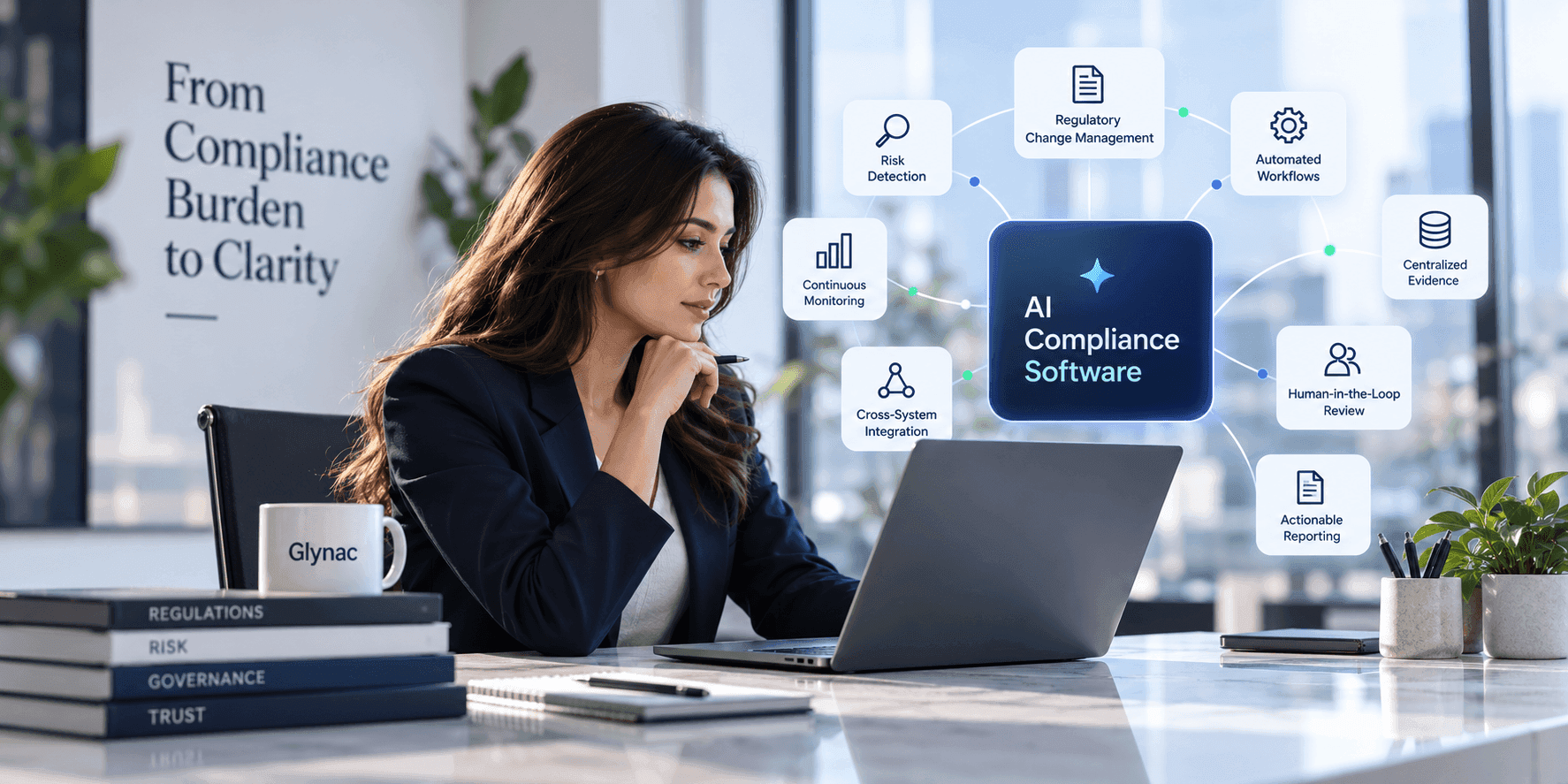
A modern compliance management tool helps teams shift from reactive audits to proactive risk control. Explore six key ways it improves coverage, automation, and decision-making.
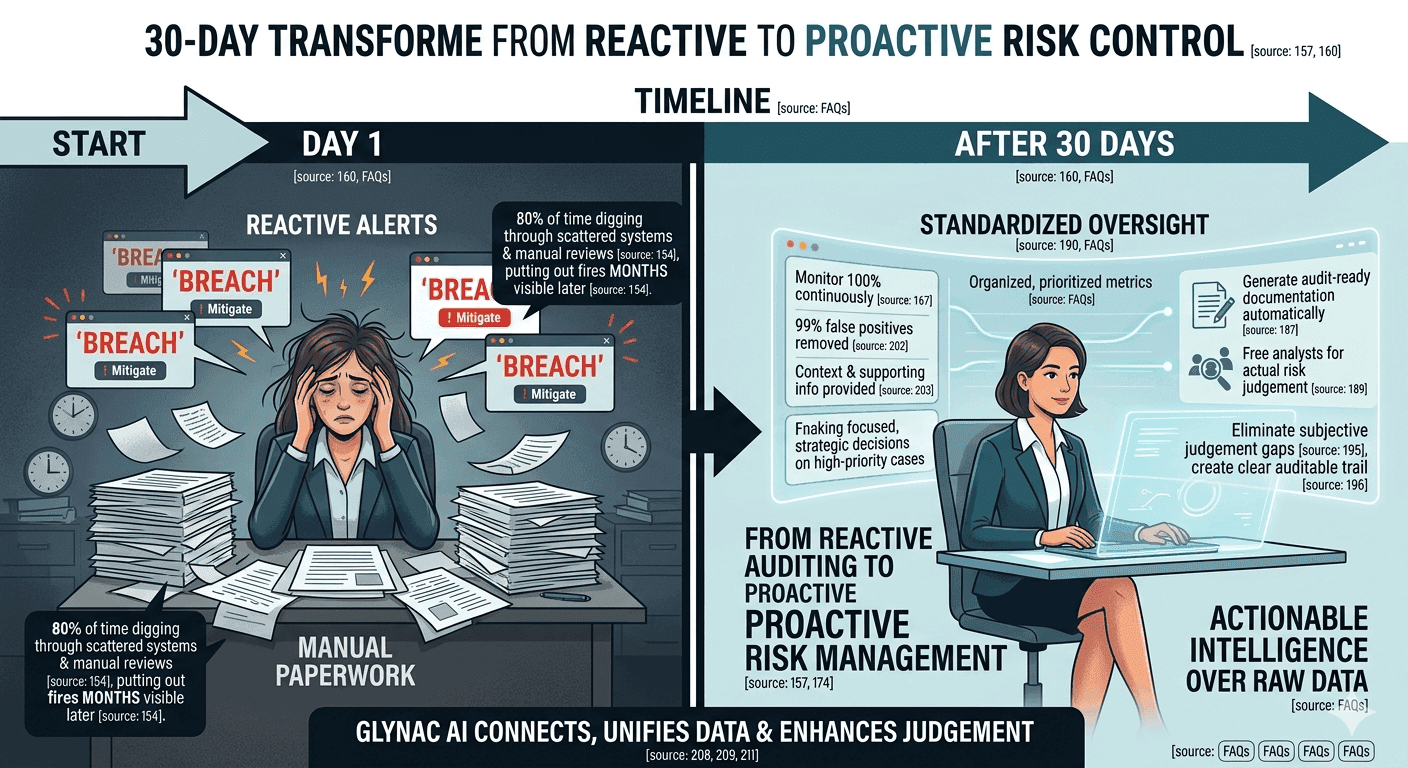
For most compliance teams working in wealth management today, risk control is still a largely reactive exercise. Teams spend 80% of their time digging through scattered systems and manually reviewing documents, and 20% of their time putting out fires that were already visible months earlier.
A modern compliance management tool does not just add another dashboard to your stack. It changes the entire relationship between your team and risk. For the first time teams can move from reactive auditing to proactive risk management, without adding more headcount or more administrative work.
Ways a Compliance Management Tool Improves Risk Control
Good compliance management software will improve risk control across every part of your operation in very specific, measurable ways. None of these benefits are theoretical. They are changes that compliance teams see within the first 30 days of implementing a properly built tool. Below are the six most impactful changes that almost every team reports.
1. 100% Coverage Instead Of Sampling
The single biggest flaw in almost all modern compliance operations is that teams can only review between 5% and 10% of all advisor activity. This is not a choice, it is a mathematical necessity given limited time and resources. Every compliance team knows that they are effectively playing a lottery with risk. A good compliance management tool eliminates this gap completely.
- Monitor 100% of all communications, trades and filings continuously
- Remove random chance entirely from your risk control process
- Ensure no high risk activity falls through the cracks due to limited capacity
2. Proactive Risk Detection Instead Of Reactive Alerts
Almost every compliance software solution on the market will send you an alert after a breach has already happened. This is effectively useless for actual risk control. The only alert that matters is the one you get before a breach happens, before an audit, and before it becomes a problem that requires mitigation.
- Identify emerging risk patterns before they escalate into formal breaches
- Move your entire operation from reactive mode to proactive mode
- Give your team time to resolve issues before they require formal reporting
3. Unify Fragmented Data Across All Systems
The single most common complaint from every compliance analyst in the industry is that data lives in 12 different places. To answer one simple question an analyst will have to log into a CRM, a portfolio platform, an email archive, and a filing system. This waste of time is the single largest source of unmanaged risk in almost every firm.
- Pull all data into one single unified view accessible to the whole team
- Eliminate the need to manually cross reference data across separate systems
- Reduce the average time to answer a compliance question from 4 hours to 30 seconds
4. Automate Administrative And Repetitive Work
Compliance teams spend on average 62% of their time on pure administrative work that adds zero actual risk control value. Updating records, generating reports, updating CRMs and scheduling follow ups takes time away from the actual work of reviewing and mitigating risk. Compliance automation tools eliminate almost all of this work completely.
- Automatically generate audit ready documentation and trails
- Schedule and track all mandatory compliance follow ups and reviews
- Free your analysts to focus on actual risk judgement instead of data entry
5. Consistent Standardized Oversight
One of the largest unrecognized risks in any compliance operation is inconsistency. Two different analysts will review the exact same set of facts and come to two completely different conclusions. This inconsistency creates blind spots, audit risk, and unfair treatment across your client base.
- Apply the exact same risk framework consistently across all clients and advisors
- Eliminate subjective judgement gaps from routine review work
- Create a clear auditable trail for every single decision and review
6. Actionable Intelligence Instead Of Raw Data
Most GRC tools will flood your team with thousands of low quality alerts every month, 99% of which are false positives. This trains teams to ignore all alerts entirely, which makes the entire tool effectively useless. The best tools do not give you more data, they give you only the data that actually matters.
- Prioritize alerts by actual risk level instead of showing all alerts equally
- Eliminate 99% of false positive alerts that waste your team's time
- Deliver context and supporting information alongside every single alert
How Glynac AI Delivers On This?
Almost all compliance management software promises all of the benefits listed above. Very few of them actually deliver. Most tools are either generic AI tools repackaged for compliance, or legacy tools built 15 years ago that have not kept up with modern regulation. Glynac AI was built specifically to solve these exact problems for wealth management compliance teams.
Glynac AI is a native intelligence layer that sits on top of all your existing tools. Rather than replacing your existing systems, Glynac AI connects to them, unifies the data, and delivers the exact capabilities outlined above. Unlike generic AI tools, Glynac AI is trained exclusively on wealth management regulation and compliance workflows. It is built to enhance the judgement of your compliance team, not replace it.
- Full implementation completed in less than 4 weeks
- Native integrations with Redtail, Salesforce, Schwab, Orion and all major platforms
- Specialized AI agents each built for one specific compliance function
Conclusion
The nature of compliance risk has changed completely over the last ten years. Regulation has become more complex, advisor activity has become more fragmented, and regulator expectations have increased dramatically. Almost all compliance teams are still using tools and processes that were designed for a completely different era. This gap is the single largest source of risk for almost every compliance firm operating today.
A modern compliance management tool is no longer a nice to have for compliance teams. It has become a basic requirement to operate safely and effectively at any scale. The teams that adopt this new generation of tools will not just reduce their risk, they will be able to deliver a far better and far more responsive service to their clients. The teams that do not will find themselves falling further and further behind every single year.

Rahul Sinha
Marketing Consultant
Marketing consultant and finance content specialist with deep expertise in the U.S. and UK wealth management industry. Author of 1,000+ published articles on investing, advisory trends, and financial regulation, with work cited on MSN and other leading platforms.
Related Blogs
Continue exploring insights on wealth management
Compliance
10 Essential Features of Modern AI Compliance Software
Plenty of platforms carry the AI label; fewer can tell you why they flagged something. Here are the 10 features that separate modern AI compliance software from expensive filing, from source traceability and human-in-the-loop review to remediation you can actually verify.
Nirmala Royal
Marketing Research Assistant

Compliance
Compliance Audit Management Software: Best Practices for 2026
The audit itself isn't what wears compliance officers down—it's the fortnight before, spent digging out approvals and reconstructing who cleared what. Here's how compliance audit management software keeps evidence, ownership and monitoring running year-round, plus seven best practices for 2026.
Nirmala Royal
Marketing Research Assistant

Compliance
7 AI Compliance Use Cases Every RIA Should Prioritize in 2026
Discover AI compliance use cases that help RIAs strengthen compliance workflows, improve regulatory automation, and build effective AI risk management in 2026.
Vinamrata Yadav
Content Strategist